
Africa has a free-trade agreement. It still doesn’t have a frictionless supply chain.
AfCFTA can create a much larger market. The harder task is making that market operationally usable for companies moving goods across borders.
TAIB Advisory · September 2026 · 6 min read
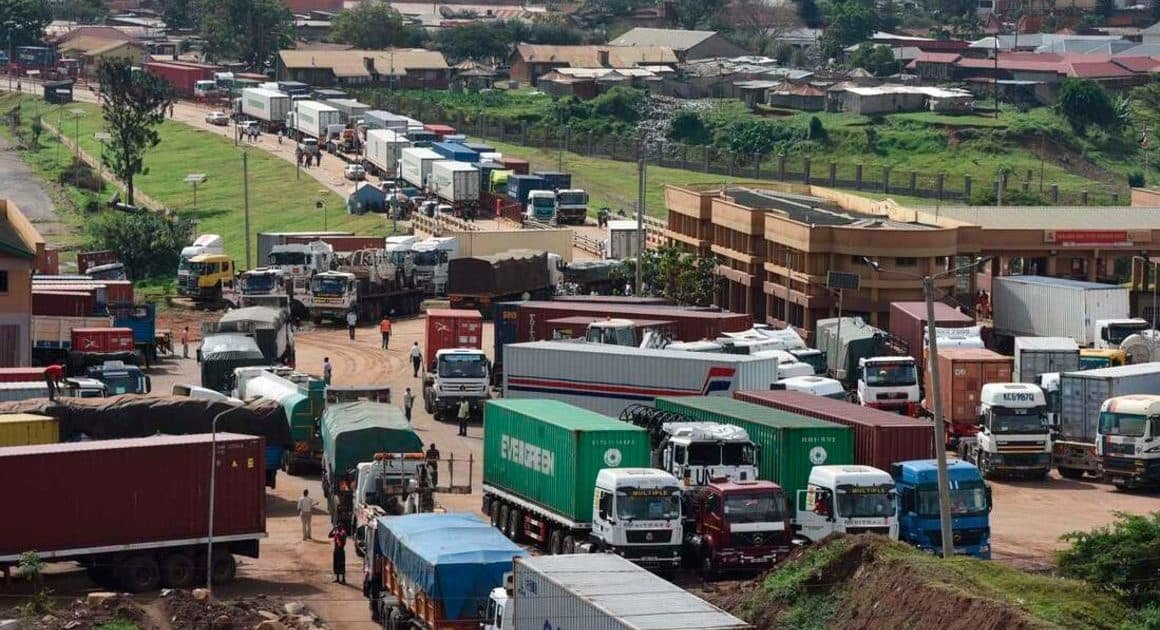
Africa’s continental trade agenda has moved into a different phase. The question is no longer whether the continent should integrate economically; the African Continental Free Trade Area (AfCFTA) has already created the framework for a much larger continental market. The harder question is whether companies can actually use that market as a coherent commercial system, with goods moving across borders at a cost, speed and level of predictability that make regional supply chains competitive.
That distinction matters because intra-regional trade is still only around one-fifth of Sub-Saharan Africa’s total exports, even though the trade that does occur within the region is generally more diversified and manufacturing-intensive than exports to the rest of the world. The World Bank’s latest work on African integration argues that regional markets can give firms the scale to specialize, invest and grow, but only if the systems around those markets work across borders. It estimates that about 60% of Africa’s trade costs arise from factors behind the border, including customs inefficiencies, weak logistics, transport restrictions, fragmented standards, services barriers and inadequate infrastructure.12
In other words, the tariff is only one part of the cost of trading. A company can have preferential market access on paper and still find that a shipment is slower, less predictable and more expensive than the business case assumed. That is where the real supply-chain challenge begins.
Why a trade agreement does not create a supply chain
A trade agreement can lower a barrier. It does not automatically redesign the processes, infrastructure and operating model through which a shipment has to pass. A truck carrying processed food, for example, may still have to navigate customs declarations, certificates of origin, product standards, domestic taxes and fees, inspections, border queues and transport constraints. The World Economic Forum’s 2026 work on AfCFTA implementation makes the point through a deliberately practical example: tracing mango purée across East and Southern Africa showed that standards recognition, customs coordination and domestic charges can determine whether regional sourcing is commercially viable, even when tariff preferences exist.34
The detail matters. Within the East African Community, common standards for processed fruit products can allow mango purée to circulate without repeated certification, while coordinated customs arrangements and one-stop border posts reduce duplication. Yet shipments can still face domestic taxes, surcharges or other charges that vary by market. From the perspective of a supply-chain manager, the relevant number is therefore not the tariff rate. It is the full landed cost and the confidence that the shipment will arrive when the business needs it.4
That is an important shift in how African market expansion should be planned. Country-by-country market sizing is necessary, but it is not enough. A company deciding whether to serve several African markets from one regional hub, use multiple distribution points, localize production or import directly needs to understand the physical and regulatory path between the source and the customer.
The border is a process, not a line
Businesses often experience cross-border friction as a collection of small problems: a document that needs to be reissued, a standard that is not recognized, a queue that lasts longer than planned, a customs platform that cannot exchange information, or a local requirement that is not obvious when the route is designed on paper. Individually, none looks like a strategic issue. Collectively, they can determine whether a regional supply chain makes economic sense.
The AfCFTA’s own mechanisms increasingly recognize this operational reality. The continent has a formal online system through which companies can report non-tariff barriers, with national focal points responsible for following up on reported issues. UNCTAD notes that the mechanism is open to private companies, including smaller businesses, and is intended to provide a practical channel for identifying and resolving barriers encountered in day-to-day trade.5
There is also progress in digitizing trade documentation at the regional level. In June 2026, Seychelles launched an electronic certificate-of-origin system under COMESA, allowing traders seeking preferential access under both COMESA and AfCFTA arrangements to apply electronically and transmit certificates between member states. COMESA reported that five member states were implementing its e-certificate by April 2026, while its electronic single-window system was being implemented across a wider group of countries.67 These examples matter not because one platform solves the integration problem, but because they show where interoperability can reduce friction when systems are designed around the movement of the shipment rather than the internal structure of each institution.
The next phase of AfCFTA is about interoperability
The World Bank’s August 2026 report is unusually clear about what has to happen next: customs, standards, transport, payments, energy, digital systems and services need to work across national boundaries. It also argues that regional production can connect mineral extraction with processing and manufacturing, agricultural production with regional food industries, renewable energy with industrial hubs, and professional and digital services with firms across the continent.12
That is a supply-chain proposition as much as a trade-policy proposition. A regional market only creates economic value when companies can organize production and distribution around it. If a manufacturer can source from one country, process in another and sell into several markets with predictable customs and logistics, the larger market changes the investment case. If every border still behaves like a separate operating environment, the theoretical size of the market matters far less.
This is why the most interesting implication of AfCFTA for companies may be a rethink of the African operating model. Rather than asking which individual country looks most attractive, management can start asking which combination of countries creates the strongest regional supply chain: where to hold inventory, where to assemble, which markets can share a distribution platform, which routes provide enough service reliability to justify centralization, and where local production actually improves the economics.
What companies should be measuring
A more commercial approach starts with a few questions that can be tested route by route. First, what is the total landed cost, including transport, border, taxes, warehousing, inventory and the cost of uncertainty? Second, which regulatory requirements are genuinely structural and which can be simplified through mutual recognition or better documentation? Third, where are the critical nodes in the physical network, and how exposed is the business to a single corridor or border? And fourth, what level of service does the customer actually need, and how much working capital is required to protect that service level when transit times vary?
Those questions sound operational, but they are fundamentally strategic. They determine whether a business should manufacture locally, import through a regional hub, use a third-party logistics partner, hold more inventory, redesign its sourcing footprint or accept a higher-cost but more reliable route. The right answer will differ by product, value density, demand profile and customer promise.
The important point is that AfCFTA makes these decisions more valuable, not less. A larger potential market creates more opportunities to consolidate demand, specialize production and build regional scale. But the economics of that scale only appear when the network around the market is usable.
The commercial test is whether regional trade becomes predictable
Africa does not need another argument for why a continental market is attractive. The opportunity is already clear. The harder task is converting legal market access into a supply chain that works every day.
That means measuring progress through outcomes that companies actually feel: shorter border times, lower logistics costs, fewer duplicated procedures, more recognized standards, better corridor reliability and more firms able to source, produce and distribute across multiple markets. The World Bank has made essentially the same point in its latest integration agenda: progress should be visible in the operating experience of businesses, not just in the architecture of the agreement.1
For companies looking at Africa, that is the practical message. AfCFTA can remove some of the legal barriers to building a regional market. The next competitive advantage will come from building the operating system around it.
The agreement creates the market. The supply chain determines whether you can use it.
Sources
- World Bank — “Integrating Africa: From Threads to Hubs” (28 August 2026) — the 2026 integration agenda, including the shift toward regional production hubs, interoperability and outcome-based measures of integration. worldbank.org (opens in a new tab)
- World Bank — “What’s Next for Africa’s Integration Agenda” (28 August 2026) — the estimate that roughly 60% of trade costs arise behind the border, intra-regional trade at about one-fifth of Sub-Saharan exports, and recommendations on customs, standards, transport, payments and regional value chains. worldbank.org (opens in a new tab)
- World Economic Forum — “AfCFTA Implementation: Learnings from Value Chains and Regional Blocs” (18 May 2026) — private-sector case study and implementation priorities across customs, standards, domestic taxes and fees, non-tariff barriers, geography, infrastructure and security. weforum.org (opens in a new tab)
- World Economic Forum — “What tracking mango purée across Africa reveals about trade” (25 May 2026) — operational examples from East and Southern Africa, including standards recognition, customs coordination, domestic charges and corridor realities. weforum.org (opens in a new tab)
- UN Trade and Development (UNCTAD) — Non-tariff barriers: monitoring, reporting and eliminating mechanisms — AfCFTA’s private-sector non-tariff-barrier reporting and resolution mechanism. unctad.org (opens in a new tab)
- Seychelles Revenue Commission — “COMESA and Seychelles launch electronic Certificate of Origin” (19 June 2026) — regional e-certificate-of-origin implementation and AfCFTA preferential trade documentation. src.gov.sc (opens in a new tab)
- COMESA — Trade & Customs Division — status of the COMESA e-certificate and electronic single-window implementation as of 2026. comesa.int (opens in a new tab)
This note separates the legal framework AfCFTA creates from the operational conditions that decide whether a regional supply chain is commercially viable. Company and regional-organization examples are presented as reported developments; the broader management implications are analytical conclusions drawn from those facts, not claims about any single country’s policy performance.