
India wants global airlines. Building a global network is harder than buying the aircraft.
India has the domestic scale, the aircraft orders and an increasingly international ambition. The harder part is turning those ingredients into a network that is deep, profitable and resilient enough to compete globally.
TAIB Advisory · September 2026 · 8 min read
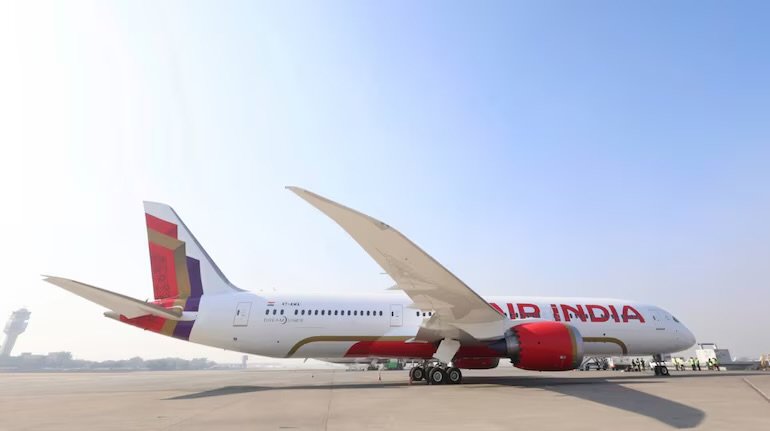
India has most of the ingredients people would expect from a future aviation powerhouse. It is already the world’s third-largest air transport market by origin-and-destination passenger traffic, with roughly 174 million passengers traveling from and within India in 2024. Its domestic market is enormous, aircraft orders are among the industry’s largest, new airports are being built, and both of the country’s leading airlines are now pursuing international expansion with considerably more ambition than they did a few years ago.1
Yet there is a revealing gap between the size of India’s aviation market and the position of Indian airlines in international traffic. The Government of India’s Civil Aviation Statistics Handbook for FY2024-25 put Indian carriers at 45.8% of international passenger traffic, with foreign carriers carrying the remaining 54.2%. IndiGo accounted for 19.3% of international passengers and Air India for 13.4% in that year. More recent reporting put Indian carriers’ share at 42.4% in the March 2026 quarter, although that period was affected by operational and geopolitical disruption and should not be treated as a clean structural trend.23
That is why the current expansion is more interesting than the headline aircraft orders. India does not simply need more seats flying internationally. It needs Indian airlines that can build networks which attract demand, feed themselves from the country’s enormous domestic market, work with the right partners, support the right customer proposition and remain economically viable when conditions change.
There are two very different ways to build a global airline
Air India and IndiGo are taking different routes toward a similar ambition, and the contrast is useful. Air India is rebuilding the full-service global network around Delhi and Mumbai, investing in long-haul aircraft, cabins and international connectivity while trying to integrate the businesses brought together under the Tata Group. In its March 2026 international route map, Air India listed 41 nonstop international destinations across five continents, and in May it said the group would continue operating more than 1,200 international flights each month despite temporary network reductions caused by airspace restrictions and high fuel prices.45
Its approach is recognizably that of a network carrier: long-haul flying is supported by a large domestic feed, hubs in Delhi and Mumbai, a premium cabin proposition and partnerships that extend the network beyond the routes the airline can economically operate itself. In January 2026, Air India and Singapore Airlines signed a framework to deepen their partnership, including the possibility of a joint business arrangement and more seamless connectivity between their networks. Air India’s “Easy Connect” programme is another part of the same logic, using domestic flights from cities such as Varanasi, Amritsar and Ahmedabad to feed international journeys through major hubs.67
IndiGo is building from a different base. Its advantage is enormous domestic scale and a low-cost operating model, which it is now extending outward. In calendar 2025, IndiGo carried 124 million customers and served 42 international destinations. It added 10 international destinations and 30 international routes during the year, while beginning long-haul operations and introducing the A321XLR, which the airline is using to open direct routes that would be harder to justify with larger widebody aircraft.8
The airline is also building international reach through partnerships rather than trying to operate every part of the network itself. Its Delhi and Mumbai–Istanbul services, for example, can connect passengers onward to more than 50 destinations through its codeshare with Turkish Airlines. Its Aegean partnership adds further European destinations, while Jetstar provides onward access in Australia.9
Aircraft matter. But the network matters more.
The reason fleet strategy gets so much attention is straightforward: the economics of the aircraft determine which routes an airline can consider. The A321XLR is particularly interesting because its range and relatively low capacity allow an airline such as IndiGo to consider city-pairs that sit between traditional narrowbody short-haul economics and widebody long-haul economics. IndiGo’s first XLR entered service on Mumbai and Delhi–Athens in January 2026, followed by deployments on Istanbul and other long-range routes.10
But an aircraft only creates an opportunity. It does not create demand, and it certainly does not create a network. A new direct route works when the traffic is sufficient, the timetable is useful, the aircraft is productive, the yield supports the cost base and the route contributes to the wider network rather than behaving as an isolated piece of capacity.
That is why the most important strategic asset of a global airline is arguably not the aircraft itself but the ability to make the network reinforce itself. A passenger flying from Ahmedabad to London may be far more valuable to a hub airline than the economics of the Ahmedabad–Delhi sector or the Delhi–London sector considered separately. The domestic flight feeds the hub; the hub fills the long-haul aircraft; the long-haul service creates a reason for passengers to use the airline across multiple journeys. When that loop works, the network becomes an advantage. When it does not, the airline is left with a collection of routes that each have to justify themselves independently.
Partnerships are part of the network, not an accessory to it
This is particularly important for India because there are many markets that are commercially attractive but too thin to support a nonstop service on an airline’s own metal. Partnerships can extend the addressable network without requiring an airline to carry the entire cost of serving every destination.
IndiGo’s Turkish Airlines relationship is a good example: the Indian carrier can offer its customers access to a much wider European and international network through Istanbul without having to operate those onward routes itself. Air India’s developing relationship with Singapore Airlines follows a similar principle at a different end of the market, using coordination between two network carriers to broaden connectivity and potentially create a more seamless proposition.69
The strategic question is therefore not simply how many routes an airline operates. It is how much of the world’s relevant demand it can serve through a combination of its own network, partner networks and schedule. That is a much more useful measure of global reach than the number of dots on a route map.
Global ambition also requires a product that can carry the economics
There is another part of the transformation that is easy to underestimate. India can add international destinations relatively quickly; building a carrier capable of competing for higher-value international traffic takes longer.
Air India has been investing in exactly this part of the proposition. In 2026 it introduced or expanded Premium Economy and First Class on selected routes and deployed refurbished Boeing 787 aircraft on key long-haul markets. Its stated objective is not simply more capacity but a better international product and customer experience.11
That matters because long-haul economics are not created by filling seats alone. Schedule quality, reliability, premium demand, loyalty, cargo, ancillary revenue and corporate relationships all influence the economics of the network. A carrier can have enough passengers to fill an aircraft and still struggle to generate attractive returns if the mix of customers and fares is wrong.
The operating challenge has become even more visible this year. IndiGo temporarily suspended a number of international routes in the summer of 2026 as it responded to softer demand and a difficult cost environment, while later announcing that it would end its short-term widebody damp lease programme and transition Mumbai–Amsterdam to the A321XLR, with Heathrow services temporarily discontinued until its A350s arrive. Air India also adjusted a range of international frequencies in response to airspace restrictions and high fuel prices.125
Those moves should not be read as evidence that the international strategies are failing. Airlines constantly rebalance capacity as fuel prices, aircraft availability, geopolitical conditions, yields and demand change. What they do illustrate is that global scale does not remove the underlying commercial discipline of the airline business; it makes network planning more complicated.
India’s opportunity is not simply to fly more. It is to capture more of its own international demand.
This is where the market-share picture becomes important. India’s domestic market is already enormous, but foreign airlines continue to carry more than half of India’s international passenger traffic on the latest full-year official data.2
That leaves a large commercial opportunity for Indian carriers, but it is not an automatic one. Capturing more international traffic requires the domestic network to feed international hubs efficiently, the hubs to offer useful frequencies and connections, aircraft to match the economics of each route, the product to compete for different customer segments, and partnerships to extend the network where operating another flight would not make sense.
In other words, India does not need a single national airline strategy. It needs airlines with distinct models that can each build a coherent international proposition.
Air India’s challenge is to turn its scale, long-haul fleet, hubs, brand and partnerships into a reliable full-service network capable of competing for high-value traffic on its own terms. IndiGo’s challenge is different: to preserve the cost discipline and simplicity that made its domestic model so successful while adding the complexity required to become a meaningful long-haul and international carrier.
Neither challenge is primarily about the size of the aircraft order. It is about whether the organization can make the network economics work.
The real test is what the network looks like five years later
India is entering a period in which the country will have more airports, more aircraft and more international routes than it has ever had. That creates extraordinary opportunity, but it also creates the temptation to measure progress through the most visible inputs: aircraft ordered, routes announced, destinations added.
Those numbers matter, but they are not the outcome.
The outcome is a network that can sustain profitable connectivity through different cycles, fill aircraft from multiple sources of demand, use partnerships intelligently, build a proposition that customers will choose and continue to allocate capacity to the routes that create the most value for the system as a whole.
That is what makes the next phase of Indian aviation so interesting. The country has already shown that it can generate demand at scale. The next question is whether its airlines can turn that demand into global network strength.
Buying the aircraft is the visible part. Building the system around it is the harder work.
Sources
- IATA — “Aviation in India: Sustaining – and Growing – a Dynamic Air Transport Market” — 2024 origin-destination passenger traffic and India’s position as the third-largest air transport market. iata.org (opens in a new tab)
- Government of India, Ministry of Civil Aviation — Civil Aviation Statistics Handbook 2024-25 — FY2024-25 international traffic split and airline-level international market shares. civilaviation.gov.in (opens in a new tab)
- Moneycontrol — “Foreign airlines gain ground in India as geopolitical disruptions hit domestic carriers” (1 June 2026) — March 2026 quarter international passenger-share data, treated here as a disruption-affected snapshot. moneycontrol.com (opens in a new tab)
- Air India — International route map, March 2026 — 41 nonstop international destinations across five continents as of 18 March 2026. airindia.com (opens in a new tab)
- Air India — “Air India rationalises international route network through August 2026” — more than 1,200 international flights a month, and route adjustments driven by airspace restrictions and fuel costs. airindia.com (opens in a new tab)
- Air India — Singapore Airlines commercial cooperation framework — partnership logic and proposed deeper cooperation / joint business. airindia.com (opens in a new tab)
- Air India — Easy Connect from Ahmedabad and Varanasi — hub-and-spoke international connectivity from Tier 2 and Tier 3 cities via Indian hubs. airindia.com (opens in a new tab)
- IndiGo — 2026 awards and international expansion — 2025 customers, destinations, international route expansion and A321XLR deployment. goindigo.in (opens in a new tab)
- IndiGo — International partnerships and the A321XLR network — Turkish Airlines, Aegean and Jetstar connectivity, and the internationalization strategy. goindigo.in (opens in a new tab)
- IndiGo — First A321XLR in India — induction and international route-opening strategy. goindigo.in (opens in a new tab)
- Air India — International product and customer-experience upgrades — Premium Economy, First Class, upgraded aircraft and selected long-haul routes. airindia.com (opens in a new tab)
- IndiGo — International network optimization, June 2026 — temporary route suspensions and capacity adjustments. goindigo.in (opens in a new tab)
This note separates structural evidence from short-term operating events. The FY2024-25 international market-share figures are used as the cleanest official full-year baseline, and the March 2026 snapshot is treated explicitly as disruption-affected. Airline route plans and network data are company-reported and are presented as reported facts, not as judgments about future success.